


Biodiversity Above and Below the Soil Will Determine the Future of Food


Introduction: The Greatest Agricultural Challenge of Our Time
Humanity stands at a critical crossroads. By 2050, the world's population is expected to approach 10 billion people, increasing the demand for food, water, and natural resources at an unprecedented scale. At the same time, agriculture faces mounting pressures from climate change, soil degradation, water scarcity, biodiversity loss, and rising production costs. The challenge is no longer simply producing more food; it is producing nutritious food sustainably while protecting the ecosystems that make agriculture possible.
For more than half a century, agricultural development has been driven largely by improved genetics, synthetic fertilizers, irrigation systems, and mechanization. These innovations dramatically increased global food production and helped prevent widespread hunger. However, they also contributed to unintended consequences, including declining soil health, loss of biodiversity, pollution of water resources, and increasing vulnerability of farming systems to environmental shocks.
Today, a new understanding is emerging among scientists, farmers, and policymakers worldwide. The future of food security depends not only on the crops growing above the ground but also on the immense biological universe thriving beneath the soil surface. The biodiversity found in plants, insects, pollinators, microorganisms, fungi, and soil organisms forms a connected living network that supports agricultural productivity, environmental resilience, and human well-being.
The next agricultural revolution will not be built solely on chemistry or machinery. It will be built on biology.
The Silent Crisis of Biodiversity Loss
Across the globe, biodiversity is declining at an alarming rate. Natural habitats are disappearing, pollinator populations are shrinking, and agricultural landscapes are becoming increasingly simplified. Many farming regions now rely heavily on monoculture systems, where vast areas are planted with a single crop species.
While monocultures can deliver short-term efficiency, they often reduce ecological resilience. When biodiversity declines, farming systems become more vulnerable to pests, diseases, droughts, and extreme weather events. The loss of biological diversity weakens nature's ability to regulate itself, forcing farmers to depend increasingly on external inputs.
Plant biodiversity plays a crucial role in maintaining healthy agricultural ecosystems. Diverse cropping systems improve nutrient cycling, support beneficial insects, enhance pollination, and reduce the spread of pests and diseases. Different plant species interact with the soil in unique ways, creating a more balanced and productive environment.
Protecting biodiversity is therefore not merely an environmental concern; it is a strategic necessity for ensuring future food production.
The Hidden World Beneath the Soil
While biodiversity above the ground is visible, an even more complex and important ecosystem exists below the surface. Healthy soil is one of the most biologically active environments on Earth. A single teaspoon of fertile soil may contain billions of microorganisms and thousands of different species working together in a highly organized natural system.
Bacteria, fungi, protozoa, nematodes, earthworms, and countless other organisms form the soil microbiome. These organisms perform essential functions that no machine or synthetic input can fully replace. They decompose organic matter, recycle nutrients, improve soil structure, regulate water movement, suppress diseases, and store carbon.
At the center of this underground ecosystem lies the rhizosphere, the zone surrounding plant roots. This is where plants and microorganisms engage in a continuous biological exchange. Through root exudates, natural compounds such as sugars, amino acids, organic acids, and flavonoids, plants actively communicate with and nourish beneficial microbes.
In return, these microorganisms help plants access nutrients, tolerate environmental stress, improve water uptake, and strengthen natural defenses against pathogens. This ancient partnership has evolved over millions of years and remains one of the most important drivers of agricultural productivity.
Why Soil Biodiversity Matters More Than Ever
The world is losing fertile soil faster than it can naturally regenerate. According to many estimates, billions of tons of topsoil are lost every year through erosion, degradation, and unsustainable land management practices. At the same time, climate change is intensifying droughts, floods, heat waves, and extreme weather events that threaten agricultural production.
Healthy soil biodiversity offers one of the most powerful tools for addressing these challenges.
Biologically active soils retain more water during droughts, drain more effectively during heavy rainfall, and improve nutrient-use efficiency. They reduce the need for excessive fertilizer applications while supporting stable crop yields. Most importantly, healthy soils act as significant carbon sinks, helping to remove carbon dioxide from the atmosphere and mitigate climate change.
The future resilience of global agriculture may depend less on how much fertilizer is applied and more on how effectively biological systems are managed.
A New Agricultural Paradigm: Farming with Nature
The dominant agricultural model of the twentieth century focused on supplying crops with external inputs. The emerging model of the twenty-first century focuses on strengthening the biological processes that naturally support crop growth.
This shift represents a fundamental change in agricultural thinking. Instead of viewing soil as merely a medium for holding plants upright, modern science increasingly recognizes soil as a living ecosystem that must be nurtured and protected.
Future farming systems will prioritize biological efficiency alongside yield. Success will be measured not only by production per hectare but also by soil health, biodiversity, carbon sequestration, water-use efficiency, and long-term sustainability.
Major Steps Needed to Secure the Future of Food
1. Restore Soil Biology
Healthy soils begin with healthy biological communities. Farmers, researchers, and policymakers must prioritize practices that increase microbial diversity, soil organic matter, and biological activity.
2. Diversify Agricultural Landscapes
Crop rotation, intercropping, agroforestry, and cover cropping systems create more resilient ecosystems while reducing dependence on chemical interventions.
3. Reduce Excessive Soil Disturbance
Conservation agriculture practices such as reduced tillage and no-till farming help preserve soil structure, fungal networks, and microbial habitats.
4. Build Soil Organic Carbon
Organic matter serves as the primary energy source for soil life. Returning crop residues, compost, manures, and biological amendments to the soil strengthens ecosystem function and carbon storage.
5. Promote Root Health and Root Exudation
Healthy root systems drive biological activity below ground. New agricultural technologies that stimulate root growth and encourage beneficial root exudation can significantly improve nutrient cycling and microbial interactions.
6. Protect Pollinators and Beneficial Insects
Pollinators contribute billions of dollars annually to global food production. Creating habitats for bees, butterflies, and other beneficial species should become a standard component of agricultural planning.
7. Accelerate Biological Innovation
The future of agriculture will increasingly depend on biological technologies, including microbial inoculants, biostimulants, flavonoid-based products, regenerative farming practices, and advanced soil health monitoring systems.
8. Reward Ecosystem Stewardship
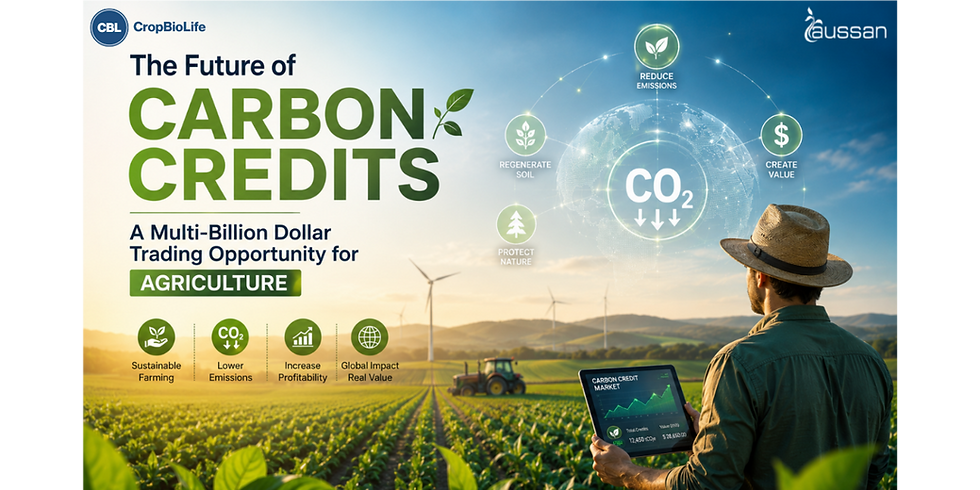
Governments and markets must recognize the value of ecosystem services. Carbon credits, biodiversity credits, and sustainable agriculture incentives can encourage widespread adoption of biodiversity-friendly farming practices.
The Future Farm
The farm of the future will look very different from many farms today. It will not rely solely on fertilizers, pesticides, and machinery. Instead, it will function as an integrated biological system where plants, microbes, insects, and soil organisms work together to maximize productivity and resilience.
Advanced technologies such as artificial intelligence, precision agriculture, biological inputs, and soil microbiome monitoring will help farmers make better decisions while reducing environmental impacts. However, technology alone will not solve the challenges ahead. Success will depend on restoring the biological foundations that agriculture has relied upon since the beginning of civilization.
Conclusion: Biodiversity Is the Foundation of Food Security
The future of food security, environmental sustainability, and climate resilience depends on our ability to protect and enhance biodiversity both above and below the soil. Every plant, microorganism, insect, and fungal network contributes to a complex living system that supports life on Earth.
The most valuable resource in future agriculture may not be a new chemical, a larger machine, or a more powerful technology. It may be the living biological capital already present within our soils and ecosystems.
If humanity hopes to feed future generations while restoring the health of the planet, agriculture must move beyond the pursuit of yield alone and embrace a broader vision—one that recognizes biodiversity as the true foundation of sustainable food production.
The farms that invest in biodiversity today will become the food-secure, climate-resilient, and economically sustainable farms of tomorrow.


Comments